Tanzania is experiencing rapid urbanization, growth in tourism, and expansion of light industry. These trends are driving up volumes of non-medical solid waste: municipal household waste, hotel and resort waste, commercial and industrial refuse, and mixed solid waste from markets and institutions. Current management still relies heavily on open dumping and a limited number of disposal sites such as the Pugu Kinyamwezi dumpsite in Dar es Salaam, which operates more like an open dump than a fully engineered sanitary landfill. (CFF Prod)
At the same time, Tanzania has a progressively stronger legal framework for environmental protection: the Environmental Management Act, the Environmental (Solid Waste Management) Regulations, 2009, and the Environmental Management (Hazardous Waste Control and Management) Regulations, 2021. These policies place explicit responsibility on local governments and waste generators to ensure safe collection, treatment, and disposal of solid and hazardous waste. (VPO)
Within this context, modern, high-temperature incineration is emerging as a necessary component of integrated waste management―specifically for non-recyclable and hazardous fractions that cannot be safely landfilled or openly burned. This report reviews the current situation and trends for non-medical solid waste in Tanzania and recommends how HICLOVER’s portfolio of containerized, top-loading, automatic, and general solid waste incinerators can address these needs in urban, tourism, industrial, and remote settings. (HICLOVER.COM)
1. Policy and Regulatory Context
Tanzania’s environmental governance is anchored in the Environmental Management Act, which assigns the National Environmental Management Council (NEMC) and local government authorities clear duties to manage and minimize solid waste and to prescribe appropriate collection and disposal systems for markets, business areas, industries, and both urban and rural communities. (VPO)
Key regulations relevant to non-medical solid waste incineration include:
-
Environmental (Solid Waste Management) Regulations, 2009
These regulations apply to all categories of solid waste in Tanzania and set out requirements for collection, storage, treatment, and final disposal, including obligations on municipalities and private operators. (Tanzlii) -
Environmental Management (Hazardous Waste Control and Management) Regulations, 2021
These rules provide permitting and tracking requirements for hazardous waste from industries and other generators, including conditions for transport and disposal at licensed facilities using technologies like high-temperature incineration. (Nemc) -
Extended Producer Responsibility (EPR) and sector regulations
Recent analyses highlight that Tanzania is progressively adapting its legislation for EPR schemes, including control of electrical and electronic waste and other complex waste streams. (ResearchGate)
Taken together, this framework drives demand for controlled treatment technologies, including incinerators equipped with appropriate flue-gas cleaning systems, particularly where recycling and composting are not sufficient to handle residual or hazardous fractions.
2. Current Situation by Waste Stream
2.1 Municipal and Household Solid Waste
Urban centers like Dar es Salaam generate large volumes of mixed municipal solid waste, with collection coverage still incomplete in many low-income areas. Primary collection is often done by non-motorized or lightly motorized crews, and most residual waste is transported to the Pugu Kinyamwezi dumpsite―currently the only legal disposal site for Dar es Salaam―about 30C34 km from the city center. (CFF Prod)
Key challenges include:
-
Predominance of open dumping and uncontrolled burning in informal settlements.
-
Limited sanitary landfill capacity and leachate management issues at Pugu. (SpringerLink)
-
Minimal source segregation, resulting in organic waste mixed with plastics, textiles, and other combustibles.
Pilot “zero-waste” models in Dar es Salaam show that even with strong emphasis on segregation, composting, and recycling, there remains a residual fraction (domestic hazardous and residual waste) that must be treated with technologies like controlled incineration rather than landfilled or openly burned. (GAIA –)
2.2 Tourism, Hospitality, and Hotel Waste
Tourism is a strategic sector in Tanzania, especially in Zanzibar and mainland coastal and safari destinations. Research on hotels in Zanzibar shows that:
-
Hotels generate considerable quantities of solid waste, including food waste, plastics, and packaging. (MDPI)
-
Many facilities still rely on limited segregation and informal collection systems.
-
Poor waste management directly affects environmental quality, coastal aesthetics, and the tourism brand. (journals.out.ac.tz)
Hotels, lodges, and resorts increasingly face pressure―from guests, tour operators, and local authorities―to minimize their environmental footprint. While composting and recycling can handle a large share of organic and recyclable waste, there remains a stream of non-recyclable plastics, sanitary waste, and confidential solid waste that is better managed through on-site or shared incineration systems, particularly in remote resort locations or islands with limited landfill infrastructure.
2.3 Industrial and Commercial Solid Waste
Tanzania’s growing industrial and commercial sectors (food processing, light manufacturing, agro-industry, logistics, etc.) produce:
-
Combustible solid waste (packaging, plastics, contaminated paper, off-spec products).
-
Hazardous solid residues (filters, sludge cakes, contaminated absorbents) that fall under hazardous waste regulations. (VPO)
The 2021 hazardous waste regulations require proper tracking, permitted treatment facilities, and stricter environmental controls. As EPR and sector-specific rules mature, industries will face stronger enforcement to avoid uncontrolled burning or disposal in ordinary dumps, creating demand for:
-
On-site incinerators for specific hazardous or confidential waste, or
-
Centralized, high-capacity incineration facilities serving multiple industrial clients. (ResearchGate)
2.4 Markets, Institutions, and Rural / Island Settings
Markets, schools, prisons, military facilities, and remote settlements (including islands and inland rural towns) typically rely on open burning or crude pits for waste management. Studies on urban solid waste workers highlight health and safety risks associated with current practices, including smoke exposure and injury. (REPOA)
In these contexts, compact, robust, and easy-to-operate non-medical incinerators can provide a significant improvement in environmental performance and worker safety―especially when combined with basic segregation to remove recyclables and organics prior to combustion.
3. Demand Trends for Non-Medical Waste Incineration
Several medium- to long-term trends are shaping the demand for incinerators in Tanzania:
-
Urbanization and population growth
Urban populations are expanding, increasing per-capita waste generation and pressure on existing dumpsites. Official briefs highlight concerns about health and safety conditions in urban solid waste management, pushing authorities to seek more controlled solutions. (REPOA) -
Tourism and hospitality growth
Zanzibar and mainland tourist hubs face mounting pressure to maintain clean beaches and urban environments; studies show that litter―especially single-use plastics―negatively affects livelihoods and tourism experience. (MDPI)
This drives hotel chains and high-end resorts to adopt more sophisticated waste treatment, including small incinerators for residual waste. -
Industrialization and hazardous waste control
As regulations on hazardous waste and EPR are implemented, industries will require compliant disposal routes for hazardous solids and non-recyclable residues. Controlled incineration will be central where other options (e.g., specialized landfills, advanced recycling) are not yet widely available. (Nemc) -
Donor-funded and PPP projects in solid waste
International initiatives in Dar es Salaam and other cities include rehabilitation of disposal sites, development of transfer stations, and exploration of waste-to-energy options. Even in “zero-waste” or recycling-focused projects, a share of mixed residuals remains for thermal treatment. (COPIP) -
Increasing environmental awareness and enforcement
National authorities, municipalities, and communities are increasingly aware of the health and climate impacts of open burning and uncontrolled dumping. This is likely to translate into stricter enforcement on open burning bans and requirements for engineered treatment technologies, including high-temperature, dual-chamber incinerators with gas cleaning. (SpringerLink)
4. Technical Requirements for Non-Medical Solid-Waste Incinerators
Although specific permit conditions vary, international good practice and Tanzanian environmental expectations suggest that non-medical incinerators should generally offer:
-
Dual-chamber design with a primary combustion chamber operating around 800C900 °C and a secondary chamber capable of >1,000C1,100 °C with sufficient residence time to ensure complete burnout of volatile gases, minimizing dioxin and furan formation.
-
Adequate residence time in the secondary chamber (typically ≥2 seconds) and controlled air supply for complete oxidation. (HICLOVER.COM)
-
Robust refractory linings designed for frequent cycling and mixed waste compositions (plastics, textiles, paper, and organic residues).
-
Safe loading systems, including top-loading or automatic feeding based on waste type and volume.
-
Ash removal and handling systems that avoid direct contact and allow safe consolidation and final disposal.
-
Air pollution control (APC) tailored to local regulatory requirements and community sensitivities, e.g., quench tower, dry or wet scrubber, bag filter, and activated carbon modules for acid gases, particulates, and micro-pollutants. (HICLOVER.COM)
Fuel flexibility (diesel, LPG, or natural gas) and reliable power supply (optionally integrated generator) are particularly important for remote or off-grid Tanzanian locations.
5. Recommended HICLOVER Solutions for Tanzania
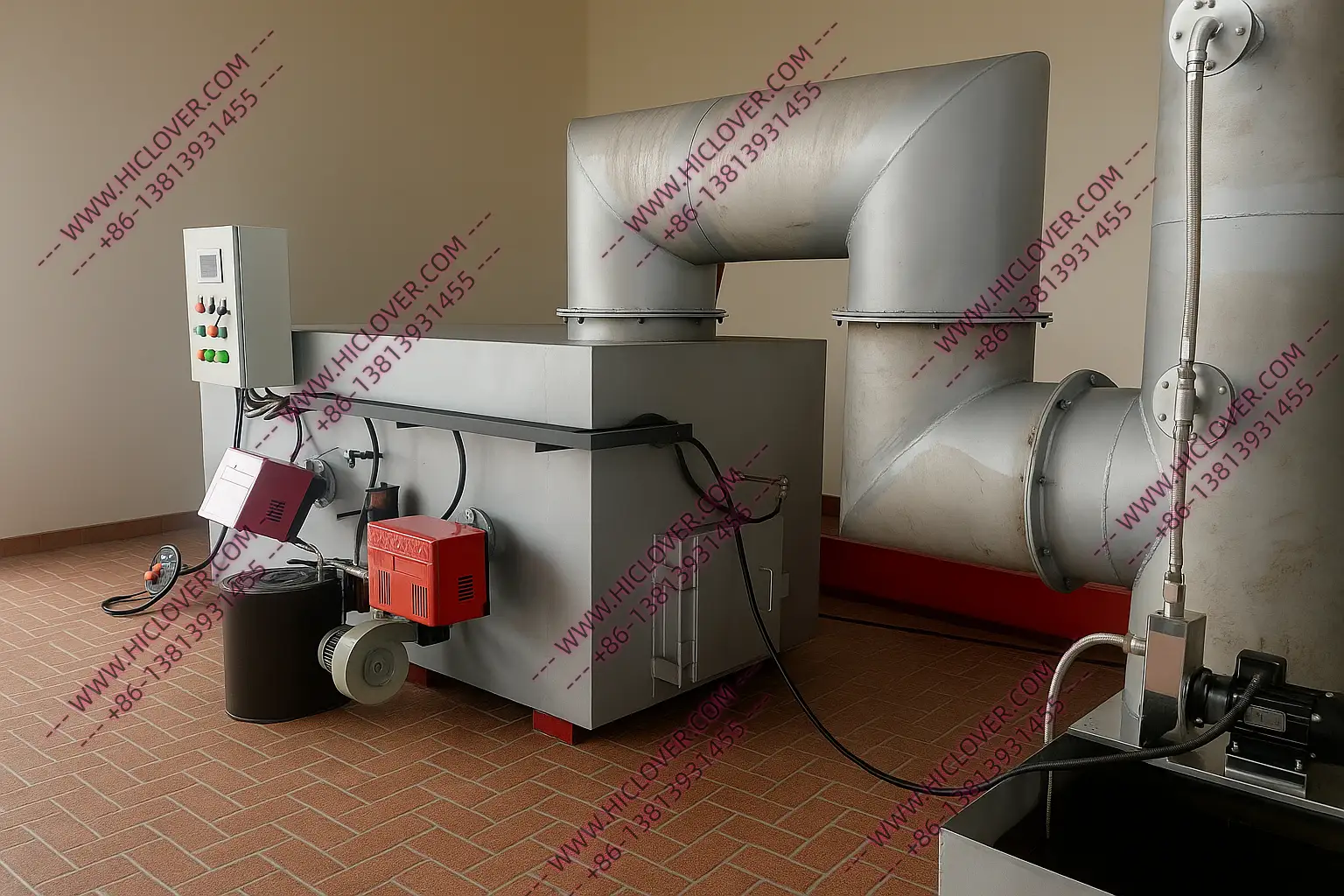
HICLOVER is a specialized manufacturer of waste incinerators, including containerized mobile units, top-loading incinerators, PLC-controlled automatic incinerators, and general solid-waste models, with optional wet scrubbers, advanced air-pollution control, and multiple fuel options. (HICLOVER.COM)
The following configurations are recommended for Tanzania’s non-medical waste segments:
5.1 Municipal and Local Government Applications
Typical scenario
District councils, town councils, and city municipalities managing mixed residual waste from transfer stations, markets, and institutions, especially where transport to distant dumpsites like Pugu is costly and environmentally problematic. (CFF Prod)
Recommended HICLOVER options
-
Containerized Mobile Incinerators (100C300 kg/h)
-
Dual-chamber design with high-temperature secondary chamber.
-
Factory-assembled inside ISO containers for rapid deployment to transfer stations or secondary towns.
-
Optional integrated APC train (quench, scrubber, bag filter) to reduce particulate and acid gas emissions.
-
Ideal for regional clusters that want to treat residual waste locally rather than send all material to central dumpsites.
-
-
Fixed General Solid Waste Incinerators (200C500 kg/h)
-
Heavy-duty refractory and steel structure suitable for continuous or semi-continuous operation.
-
Front or side-loading designs for bulk municipal fractions (plastics, paper, textiles) after basic segregation.
-
Bottom ash discharge with options for water quenching and ash handling.
-
5.2 Hotels, Lodges, and Tourism Facilities
Typical scenario
Beach resorts in Zanzibar and the mainland coast, safari lodges in national parks, and remote ecolodges producing mixed food waste (mostly compostable) plus a smaller but critical fraction of non-recyclable plastics, sanitary waste, and confidential materials. (MDPI)
Recommended HICLOVER options
-
Top-Loading Door Waste Incinerators (10C100 kg/h)
-
Batch operation, simple top-loading design suitable for daily use.
-
Handles bagged mixed residuals (after separation of recyclables and compostables).
-
Compact footprint suitable for confined hotel service areas.
-
-
Small Containerized Incinerators (TS30CTS50 class)
-
Particularly suited to high-end resorts and island hotels with limited external waste services.
-
Optional soundproofing and aesthetic cladding to blend with hotel infrastructure.
-
Can be combined with a basic wet scrubber or stack extension where community or air-quality concerns are sensitive.
-
These solutions allow tourism operators to eliminate open burning, reduce dependence on irregular municipal collection, and demonstrate environmental compliance to international tour operators and certification schemes.
5.3 Industrial and Commercial Facilities
Typical scenario
Manufacturing plants, agro-processing facilities, logistics hubs, and large commercial complexes generating hazardous or confidential solid waste that must comply with hazardous waste regulations and tracking requirements. (Nemc)
Recommended HICLOVER options
-
PLC-Controlled Automatic Incinerators (50C300 kg/h)
-
Automatic or ram-type feeding for repetitive industrial batches.
-
Advanced control over primary/secondary air, temperatures, and residence time for stable combustion of specific industrial waste streams.
-
Integrated temperature recording and interlocks to support regulatory reporting and audits.
-
-
High-Temperature Hazardous Waste Incinerators with Full APC
-
Combines dual-chamber combustion with a complete APC line (quench, dry or wet scrubber, bag filter, activated carbon) to meet stringent emission limits and corporate environmental, social, and governance (ESG) standards. (HICLOVER.COM)
-
These systems support compliance with national hazardous waste regulations and EPR-related obligations while reducing the risk and cost associated with exporting or transporting hazardous waste over long distances.
5.4 Markets, Institutions, and Remote / Island Communities
Typical scenario
Public markets, prisons, military bases, schools, and rural district centers on the mainland and islands where waste volumes are modest but open dumping and burning are common. (REPOA)
Recommended HICLOVER options
-
Small Top-Loading Incinerators (10C50 kg/h)
-
Very simple operation, minimal infrastructure requirement.
-
Appropriate for segregated residuals (plastics, contaminated paper, sanitary waste).
-
-
Trailer-Mounted or Containerized Mobile Units (20C100 kg/h)
-
Shared between several institutions in a district on a rotational schedule.
-
Ideal for islands or remote inland communities with no reliable landfill.
-
5.5 Summary Mapping of Tanzania Scenarios to HICLOVER Solutions
| Waste Scenario / Sector | Typical Waste Type | Recommended HICLOVER Solution |
|---|---|---|
| City transfer stations, markets, peri-urban | Mixed residual MSW after basic segregation | 200C500 kg/h fixed general solid-waste incinerator; containerized units |
| District towns / secondary cities | Municipal residuals, institutional waste | 100C300 kg/h containerized mobile incinerator with optional APC |
| Beach resorts, island hotels, safari lodges | Food-waste residuals, plastics, sanitary waste | 10C100 kg/h top-loading or small containerized incinerator |
| Industrial plants, agro-industry | Hazardous solids, contaminated packaging, confidential waste | PLC-controlled automatic incinerator with full APC system |
| Markets, schools, prisons, rural health / civic | Low-volume mixed residuals and domestic hazardous waste | 10C50 kg/h compact top-loading or trailer-mounted mobile unit |
All solutions can be specified with diesel, LPG, or natural gas burners, and configured with wet scrubbers, dry scrubbers, or bag filters depending on project requirements and Tanzanian permitting conditions. (HICLOVER.COM)
6. Conclusion
Tanzania’s non-medical solid-waste challenge spans dense urban neighborhoods, tourism hotspots, emerging industrial zones, and remote rural and island communities. Regulations are tightening, public awareness is rising, and the limitations of open dumping and uncontrolled burning are increasingly visible in environmental, health, and tourism impacts. (SpringerLink)
In this landscape, incineration is not a substitute for waste reduction, recycling, and composting, but a critical complement for dealing with non-recyclable and hazardous residuals. High-temperature, dual-chamber incinerators with appropriate air-pollution control provide a controlled, auditable, and environmentally safer route for this fraction.
HICLOVER, with its proven high-temperature dual-chamber designs and modular APC systems already promoted specifically for Tanzanian conditions, is well positioned to support municipalities, tourism operators, and industries in upgrading their non-medical solid-waste management systems. (HICLOVER.COM)
For project-specific designs, capacity sizing, and emission-control configurations tailored to Tanzanian regulations, stakeholders can coordinate directly with HICLOVER via:
-
Website: www.hiclover.com
-
Email: [email protected]
This approach allows Tanzanian authorities and private operators to systematically phase out open burning and uncontrolled dumping while aligning with national environmental policy and international best practice.