Mali Waste & Medical Waste Incinerator Market Report
Field Analysis from Bamako, Sikasso, Mopti, Ségou, Gao, Tombouctou
1. Mali context: why incineration is structurally important
Mali faces a combination of security pressure, geographic scale, weak centralized infrastructure, and high dependence on humanitarian and institutional systems. In this environment, waste management—especially medical waste and sensitive solid waste—cannot rely on conventional landfills or long-distance transport.
Waste generation and operational demand are mainly concentrated in:
-
Bamako – capital city, national hospitals, ministries, UN coordination offices
-
Sikasso – southern agricultural and population hub with regional healthcare demand
-
Ségou and Mopti – regional centers with hospitals, military and institutional facilities
-
Gao and Tombouctou – northern cities with security operations, camps, and humanitarian presence
In Mali, incineration is not optional infrastructure. It is a core risk-control mechanism for healthcare systems, UN missions, NGOs, and government institutions operating under fragile conditions.
2. Market characteristics specific to Mali
A. Medical waste dominates demand
The strongest and most consistent demand comes from:
-
hospitals and clinics,
-
vaccination and disease-control programs,
-
laboratories and emergency response facilities.
Open dumping or open burning is increasingly restricted or discouraged in projects linked to international organizations, making controlled incineration the default solution.
B. Security and access constraints
In northern and central Mali, access conditions fluctuate. Equipment must be:
-
transportable in standard containers,
-
installable with minimal civil works,
-
operable by locally trained staff.
This directly favors mobile and modular incinerator systems.
C. Infrastructure reality
Power instability, dust, high temperatures, and limited maintenance capacity push buyers toward:
-
diesel-fired incinerators,
-
mechanically simple designs,
-
modular components that can be replaced or relocated.
3. City-based demand analysis
Bamako – National healthcare and UN hub
Bamako concentrates:
-
national referral hospitals,
-
laboratories,
-
ministries,
-
UN and NGO headquarters.
Incinerators here are primarily used for infectious medical waste, pharmaceuticals, and secure institutional destruction. UN-linked projects often specify dual-chamber incinerators with documented operating parameters and operator training.
Sikasso & Ségou – Regional healthcare networks
These cities support large populations and regional hospitals. Waste volumes are moderate but continuous. Top-loading incinerators are widely preferred due to:
-
simple waste feeding,
-
tolerance of mixed bagged waste,
-
low operator skill requirements.
Mopti, Gao & Tombouctou – Fragile and mobile scenarios
In these regions, incinerators are often required for:
-
temporary or semi-permanent camps,
-
security and peacekeeping facilities,
-
humanitarian medical operations.
Containerized and mobile incinerators provide a decisive advantage by enabling rapid deployment and relocation when security conditions change.
4. Role of the United Nations and international institutions in Mali
In Mali, United Nations agencies and international NGOs are primary market drivers, not secondary actors.
Their influence shapes:
-
technical specifications,
-
procurement procedures,
-
training and documentation requirements.
Projects linked to UNDP, WHO, UNICEF, MINUSMA, and other UN frameworks typically require:
-
separation of primary and secondary combustion,
-
defined temperature control,
-
safe ash handling,
-
long-term operational reliability.
This procurement logic strongly favors conservative, proven incinerator technology over experimental systems.
5. Market demand trends in Mali (2025–2029)
-
Medical waste incineration remains the anchor segment, especially in donor-funded programs.
-
Mobile and modular incinerators are increasingly prioritized for security-sensitive regions.
-
Containerized solutions simplify logistics, customs clearance, and on-site installation.
-
Emission control is addressed pragmatically, focusing on functional compliance rather than complex systems.
6. Product–market fit: HICLOVER in Mali
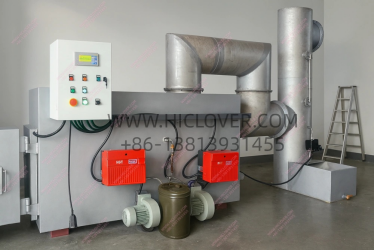
HICLOVER incinerators align closely with Mali’s operational and institutional environment, particularly through mobile and modular design philosophy:
-
Medical waste incinerators for hospitals and UN facilities
Well-suited for Bamako, Sikasso, and Ségou healthcare networks.
→ Medical Waste Incinerator Systems: https://www.hiclover.com/medical-waste-incinerator/ -
Top-loading incinerators for mixed medical and institutional waste
Effective where segregation is limited and waste is bagged or bulky.
→ Top-Loading Waste Incinerators: https://www.hiclover.com/top-loading-incinerator/ -
Containerized mobile incinerators (key advantage for Mali)
Designed for rapid deployment in Mopti, Gao, and Tombouctou, with minimal site preparation.
→ Containerized Mobile Incinerators: https://www.hiclover.com/containerized-mobile-incinerators/ -
Optional modular flue-gas treatment systems
Added selectively in urban Bamako or donor-sensitive projects.
→ Incinerator with Wet Scrubber System: https://www.hiclover.com/incinerator-with-1-or-3-section-type-wet-scrubber/
Key advantage in Mali:
HICLOVER systems emphasize mobility, modular construction, diesel fuel compatibility, and ease of relocation, making them especially suitable for Mali’s changing security and logistics conditions.
7. Strategic theme highlight: “Mobile incineration for fragile and remote environments”
A highly relevant positioning theme for Mali is:
“Mobile and modular incineration for fragile, security-sensitive environments.”
This theme reflects real procurement logic in Mali:
-
infrastructure cannot be assumed,
-
sites may change,
-
reliability outweighs complexity.
It resonates strongly with decision-makers in Bamako, humanitarian operators in Gao, and regional administrators in Sikasso and Mopti.
Résumé en français (bref)
Au Mali, l’incinération est essentielle pour la gestion des déchets médicaux et des déchets sensibles, notamment à Bamako, Sikasso, Ségou, Mopti, Gao et Tombouctou. Les Nations Unies et les ONG internationales jouent un rôle central dans la définition des besoins et des normes. Les solutions mobiles, modulaires et containerisées sont particulièrement recherchées pour faire face aux contraintes sécuritaires et logistiques. Les incinérateurs HICLOVER, conçus pour un déploiement rapide et une exploitation robuste, correspondent étroitement aux réalités du marché malien.
2025-12-13/21:57:35
|
Incinerator Items/Model |
HICLOVER TS100(PLC)
|
|
Burn Rate (Average) |
100kg/hour |
|
Feed Capacity(Average) |
150kg/feeding |
|
Control Mode |
PLC Automatic |
|
Intelligent Sensor |
Continuously Feeding with Worker Protection |
|
High Temperature Retention(HTR) |
Yes (Adjustable) |
|
Intelligent Save Fuel Function |
Yes |
|
Primary Combustion Chamber |
1200Liters(1.2m3) |
|
Internal Dimensions |
120x100x100cm |
|
Secondary Chamber |
600L |
|
Smoke Filter Chamber |
Yes |
|
Feed Mode |
Manual |
|
Burner Type |
Italy Brand |
|
Temperature Monitor |
Yes |
|
Temperature Thermometer |
Corundum Probe Tube, 1400℃Rate. |
|
Temperature Protection |
Yes |
|
Automatic Cooling |
Yes |
|
Automatic False Alarm |
Yes |
|
Automatic Protection Operator(APO) |
Yes |
|
Time Setting |
Yes |
|
Progress Display Bar |
3.7 in” LCD Screen |
|
Oil Tank |
200L |
|
Chimney Type |
Stainless Steel 304 |
|
1st. Chamber Temperature |
800℃–1000℃ |
|
2nd. Chamber Temperature |
1000℃-1300℃ |
|
Residency Time |
2.0 Sec. |
|
Gross Weight |
7000kg |
|
External Dimensions |
270x170x190cm(Incinerator Main Body) |
|
Burner operation |
Automatic On/Off |
|
Dry Scrubber |
Optional |
|
Wet Scrubber |
Optional |
|
Top Loading Door |
Optional |
|
Asbestos Mercury Material |
None |
|
Heat Heart Technology(HHT) |
Optional |
|
Dual Fuel Type(Oil&Gas) |
Optional |
|
Dual Control Mode(Manual/Automatic) |
Optional |
|
Temperature Record |
Optional |
|
Enhanced Temperature Thermometer |
Optional |
|
Incinerator Operator PPE Kits |
Optional |
|
Backup Spare Parts Kits |
Optional |
|
Mobile Type |
Optional:Containerized/Trailer/Sledge Optional |